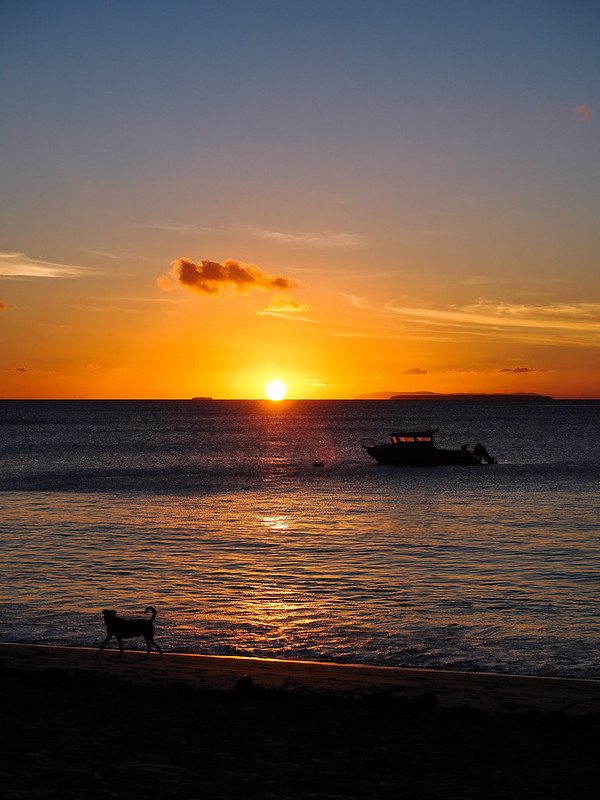
For two months Craig and I lived on a remote island in Tonga so that we could swim with humpback whales who lived in the waters surrounding us.
We reached the island by taking an overnight ferry where we slept on the floor between local families. As the boat departed Nuku’alofa, bound for the Ha’apai group of islands, a lady asked us to stop talking as an announcement was taking place. So we fell silent, waiting for a safety briefing in case the boat sank or caught on fire, but instead we just heard a prayer in Tongan. It’s a very Christian country, and apparently praying to God was more helpful than telling us where the life jackets were stored. It was a bit of a rough night with an overweight woman sitting on a camp chair beside us, vomiting into a bag.
At sunrise, we arrived at the village port, where we watched an octopus hunt in the water below the pier. It was fascinating seeing it change colour to blend in with its surroundings and hunt stealthily.
A much smaller boat came to collect us and then we were cruising across the blue water to a remote island where our friend ran a whale-swimming business and rustic resort.
Our home was a tent encircled by native bush and palm trees, with an opening that led onto one of the most beautiful beaches in the world.


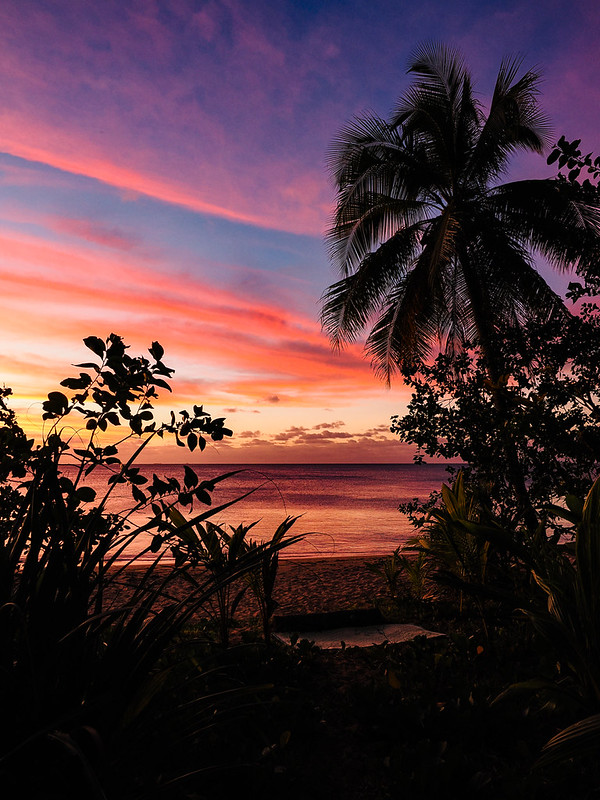
We had a couple of thin mattresses on the floor which sank so we could feel the hard floor against our hips. But somehow we got used to it, along with many other challenges that come with living on an island.
Electricity was supplied through solar – but after multiple cloudy days in a row, the generator was turned on to keep important things like the fridges running. Drinking and cooking water was from the rain tanks, but water for everything else came from a well. It was a mix of salty and fresh water so for two months we constantly had that sticky, salty feeling on our skin and hair.
We also had to deal with a lot of critters. Large orb spiders lived in webs between trees. A resident one who had lived in the same place for two years moved homes, causing my friend to unfortunately walk directly into the web with the spider crawling across her face. When I heard her scream I thought someone was being attacked by dogs or wild pigs.
There were much bigger, hairier and scarier spiders that lived amongst the fallen leaves on the ground beside our tent. Craig left his wetsuit on the floor for a couple of days and after wearing it on a boat for over an hour he happened to look down and see the humongous brown spider crawling up his thigh. He frantically flicked it off and nearly caused everyone to jump overboard to avoid getting near it.
Then there were the caterpillars, locusts, giant moths, stick insects, and large red hermit crabs that would all come out at night. Bats would swoop above our tent at dusk, spraying pee over the tarpaulin, and mice would scurry through the shrubs and across the kitchen counters.
The island had a circumference of 10km, with a little cut-through so we could walk either a loop around the top or bottom of the island – because ten kilometres was too much to do in one go when each step sank into the sand.
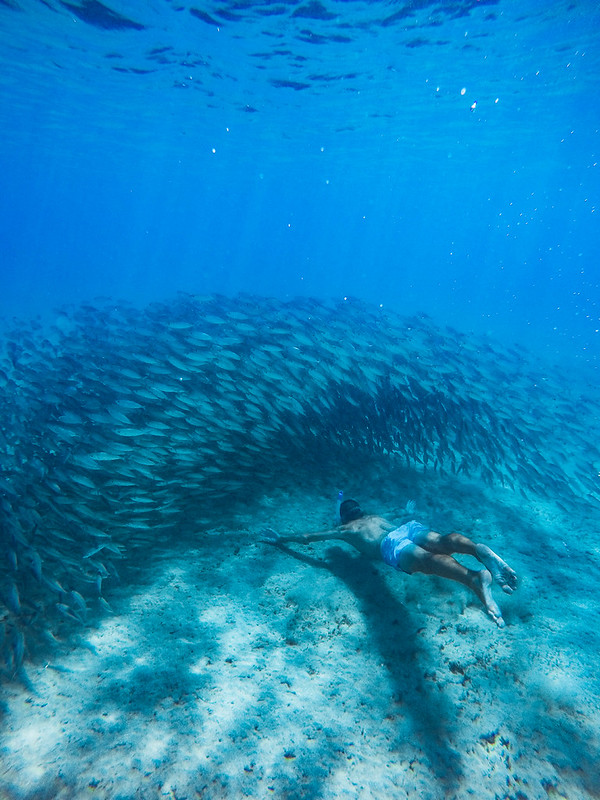
Sometimes we’d see bait-balls of fish creating dark shadows in the sea, and we’d snorkel out to see them. We watched as they shifted shapes around us, creating dark cave-like formations.


We’d often take the paddle boards or kayaks out for a spin in the bay, making our way along the coast and watching the twinkly blue water and reef pass below us.


On a clear day we could see a volcano on the horizon. It was a reminder of how dangerous life can be on the Ring of Fire. Just three years earlier in this very region, the largest recorded underwater volcanic eruption took place – spewing ash 58km into the sky, and with a bang so loud that people in Alaska heard it. Tonga suddenly lost all service and contact with the outside world – all they knew was there was an almighty noise and everything was covered in ash.


Earthquakes and tsunamis were also a big fear – and our friends experienced one the year before our visit. She said the tsunami warnings advised everyone to evacuate to the hospital, which was just six meters above sea level.
It was a reminder that we had nowhere to go if a tsunami hit. The islands are flat in Tonga with our best bet being climbing a tree.
The island had its challenges – the biggest turned out to be living with a group of strangers for two months. Most people were easy to get along with, but one negative person can make it challenging for everyone so the social aspect of the island wasn’t nice for us.
A different sort of challenge was the risk of infection in the humid environment. Cuts just didn’t heal and one tiny cut on the top of my foot became infected.
At the same time, I developed a pain in my inner thigh which was extremely sore to the touch. When I inspected it, I noticed a small red patch – which grew every time I looked at it.
Friends began telling me horror stories about when they had to go to the hospital for an infected cut and every day the doctor would scoop out the bad bits – leaving a big dent and scar.
But I needed to get medical attention – which meant catching a boat to a different island to visit the hospital which was the only place to speak to a doctor and get medication.
The sweet receptionist was wearing a long red skirt, matching red top and a traditional Tongan Kiekie, which is a woven, fringed, belt made from natural fibres. She took my details and I was seen within five minutes.
The doctor diagnosed it as cellulitis – a bacterial skin infection that can be extremely dangerous and lead to sepsis. I was given antibiotics, antibacterial cream for the cut, and painkillers. Interestingly I think the two issues were connected as lymphatic vessels run directly from my foot to the lymph nodes in my inner thigh, so I think it was the same infection spreading.
After the hospital I was given a full island tour by our friend, exploring the stunning beaches in the north and then back down to the rustic village where she had a second home. Her dogs and pigs roamed freely through the neighbourhood and I asked how they made sure they returned “We just give them coconuts and they always come back.”
But it’s a short life for a pig in Tonga – they’re regularly cooked on a stick above a smouldering fire until crispy and golden brown. Tongans love meat and once a week at our camp they’d spit roast a pig and make Lū which was taro leaves covered in coconut milk with corned beef or lamb. It was wrapped up in foil and cooked in an underground oven.
The coconut milk was all made by hand – and we watched the locals crack the coconuts open with ease, letting the water spill to the floor. It was the insides they were interested in, and they sat on a narrow wooden stool which had a metal blade on the end to scrape the dry coconut out. Once it was all grated, they used the coconut husks to create a natural muslin, squeezing the coconut and releasing lashings of milk.
While I was in the hospital, Craig went snorkelling on his own – which I’d told him not to do. The idiot went to the east side of the island which had strong currents and he was almost swept out to sea. At one point his snorkel fell out and he only just managed to swim down to retrieve it. He watched in horror as the tip of the island approached – if he went past it he’d have ended up in the deep channel and swept away.
Thankfully, he just made it to the shoreline in time. Did he get any sympathy from me when I found out? Absolutely not. I was so angry that he foolishly went alone and didn’t tell anyone where he was going. Of course I was relieved he was ok, but what a plonker going on his own.
The east side was truly wild – often windswept with crashing waves along the edge of the reef. But it was ever so beautiful – with turquoise water and reef sharks visible through the clear water.

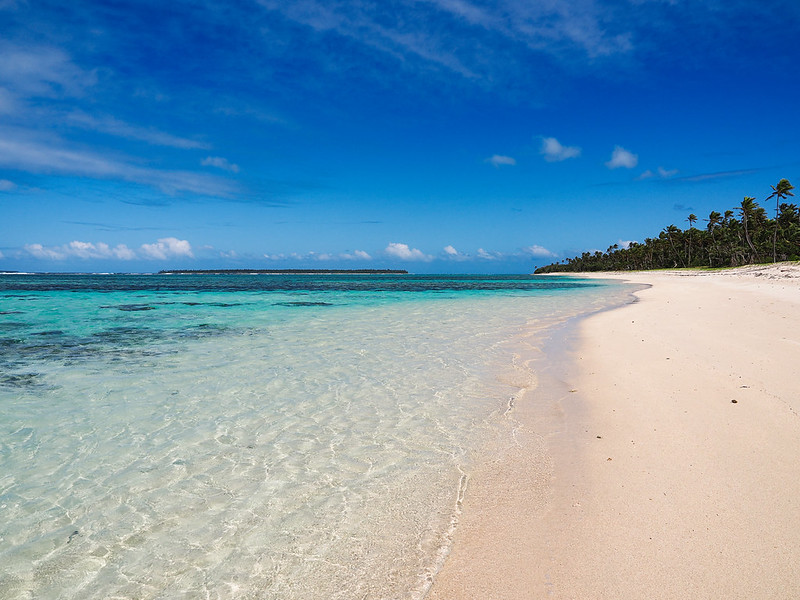

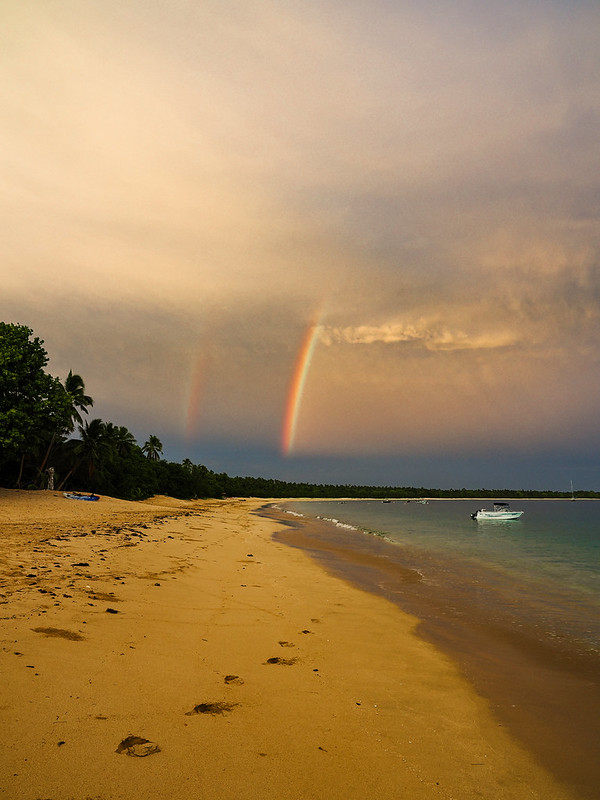
I loved our walks along the east coast, searching for unique shells and watching storms roll through at the same time as the sun hit the blue water.
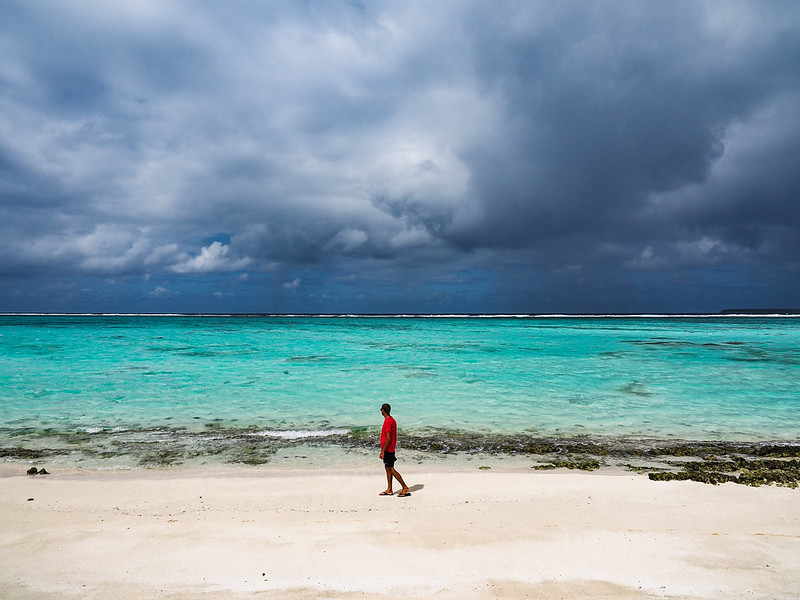

We didn’t have the most positive experience on the island – I think living in such a remote place enhances dramas and conflicts. Life without TVs or sleeping in a constantly damp tent just isn’t for everyone, but they were all aspects we didn’t mind.
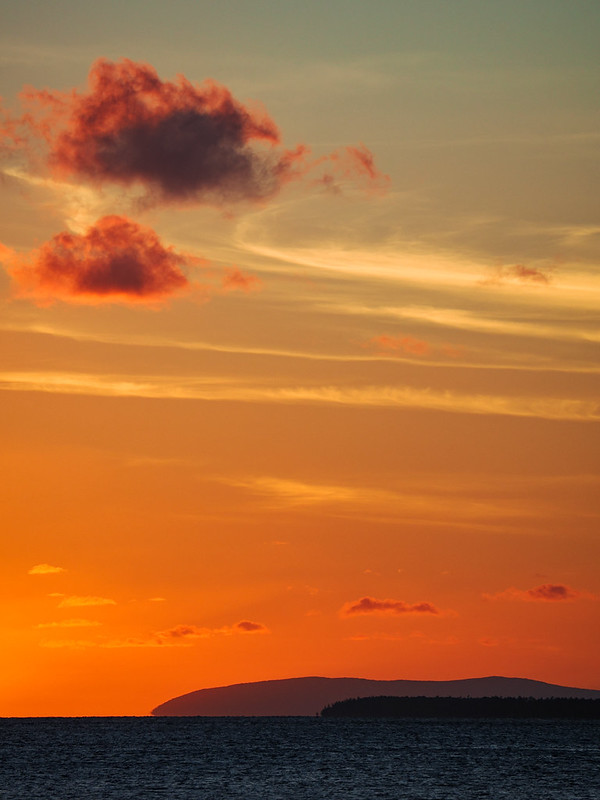

We still had a lot of fun times and met some lovely people – and of course the main reason for our visit was to swim
with whales which was the real highlight, so I’ll talk about that in my next post.