After reaching the northern Yasawa Islands, our plan was to gradually work our way back south. So we left Nanuya Island and took a short boat ride across to Matacawa Levu Island. Our accommodation was set on a hill above a tidal inlet lined with mangroves, so it wasn’t an idyllic location because the water was murky from the muddy floor.
On the plus side, it felt like a lovely, remote place to spend time in nature. The tide was low so we waded through the shallow water, unsure of where we were putting our feet in the grey, opaque water. Little crabs were all over the silty shoreline, featuring one oversized claw and one in the correct proportion to its body.
The guesthouse had a wooden structure beside the water where we would enjoy our meals, and up some steps was our accommodation. There was only one other guest staying at the time so it was lovely and quiet; in fact, for the first time in Fiji we could hear the birds instead of lapping waves. Occasionally we’d hear kids singing together in the nearby school which was very sweet.
We had a few nights on the island so we set off on a stroll to a distinctive rocky mound. The trail was a bit overgrown in areas but a lovely dog came along with us to ensure we knew the way. Just as we approached the top, the dog bolted, and we saw a group of wild goats darting away, taking perilous routes around the cliff face.
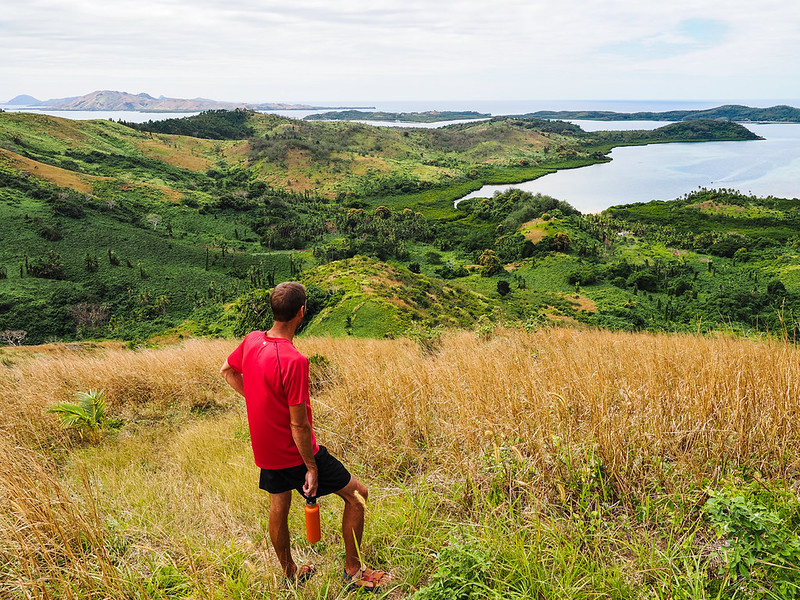

In Fiji, it’s common to use dogs to help hunt goats, pigs and cows on the islands and this one clearly had a scent for his potential dinner. Apparently, the goats in particular are in demand by the Indian Fijians on the mainland so when they hunt them they try to keep the goat alive and transport it by boat to the mainland.
We took a seat on a boulder and admired the view of the rugged island and reef visible in the sea below us. When we made our way back down we spotted the goats – standing safely at the top of the rock.
One afternoon we ventured across the island to Long Beach. We were unsure if we were actually allowed to do the walk as it passed the school and went through the village, which seemed to have a chargeable fee to the village chief, so we speed-walked through and didn’t have any issues. The only problem was that it was low tide and the sea was very shallow so it wasn’t possible to swim.
We passed some pretty palm groves though, with a few tied-up cows and locals were planting cassava. When we passed the school the kids were all lined up outside in their cute little uniforms. We noticed on the wooden walls of the school a sign listed the jobs for the children to do which included cleaning the outhouse toilets. It was an interesting concept – instead of hiring cleaners the kids did it themselves.

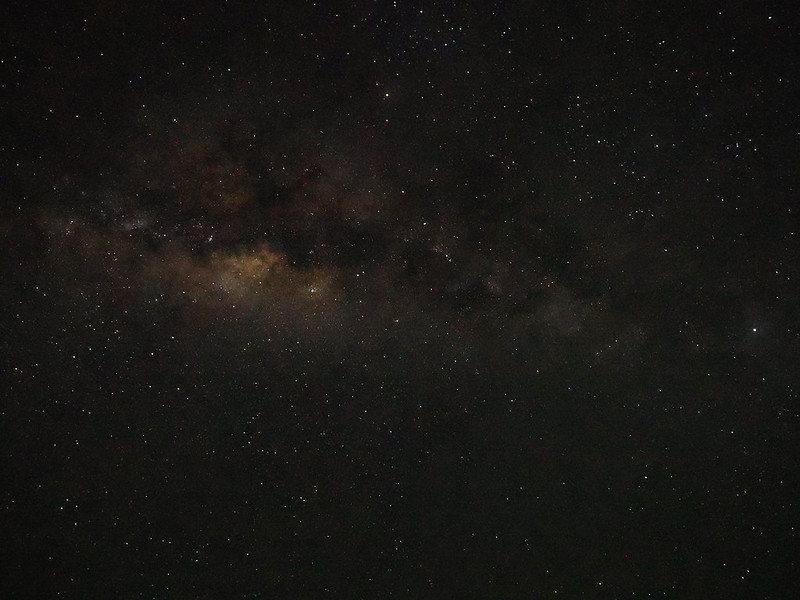
We had some fabulous dark skies while staying on the island, with the Milky Way clearly visible.
Matacawa Levu was probably our least favourite island that we visited – but we also had cloudy weather every day, which didn’t help. Our accommodation had a free kayak to use to access a little white sand beach but there was too much wind on our visit to take advantage of it.
When it was time to leave we were taken to the pick-up location for the Yasawa Flyer where we travelled south to Naviti – our final island. Here we were staying in the village of Soso, where we had to pay a landing fee to the village chief, plus gift him $20 Fijian worth of kava or the equivalent in cash.
Our little boat headed towards a big, curved beach lined with the tall palm trees, and hidden behind them was the village of Soso, where everyone lived in little wooden bungalows. There were four churches for the population of around 450 people.


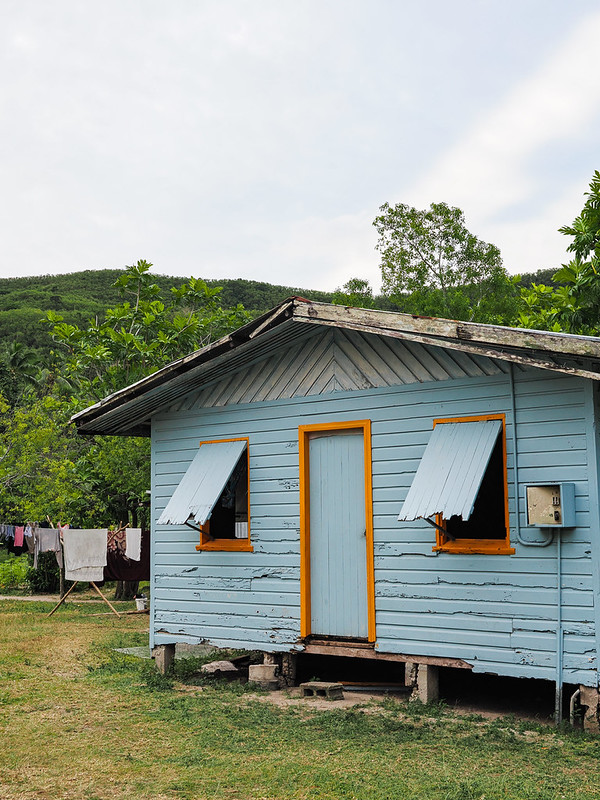
It was a very well-kept village with tended paths, the edges lined with blooming flowers and plants. Our homestay was owned by a lovely family who were just starting their business. We were welcomed with fresh coconuts and handmade flower garland necklaces which was such a sweet touch, especially as it was only £9.50 a night including breakfast.
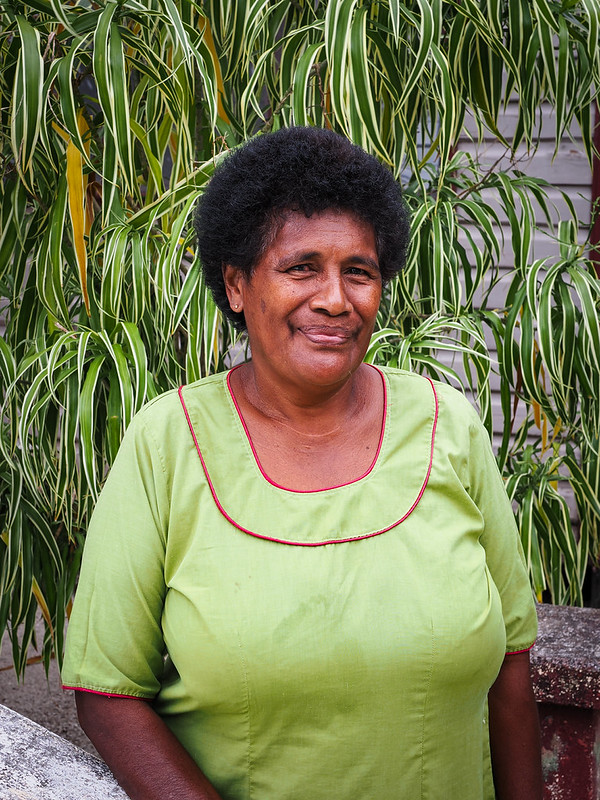
The room was immaculate, as was the outside bathroom so we really felt at home with the sweet family.
One thing we wanted to do from Soso was swim with manta rays who feed nearby. It was only £25 per person so we decided to give it a whirl. Usually George, the son, would take us but he wasn’t feeling well so we went with his 6ft tall uncle who was a fisherman. He wore a fully waterproof trouser and jacket suit along with wellies – which ironically was a much better outfit than the sarong I wore because I was freezing.
We arrived early after hearing it can get busy, but the problem was we couldn’t find the manta rays. We went back and forth along the channel, but to no avail. Gradually more boats turned up but everyone was in the same boat – excuse the pun. So the captain decided to take us to a nearby beach as he was hungry and wanted a coconut.
Using a pole he found on the tide line, he managed to get six coconuts down and then found a pointed stick which he jabbed into the ground. He then slammed the coconuts onto the spike to open up the outer part, ripping off the strong husk with his hands.
He poked a hole in the top and it was ready to drink. A few smacks on a rock and the whole thing split in half, and on his recommendation, we used our thumbs to scrape out the flesh. He made the whole process look so easy, but his hands were large and strong and I knew if Craig or I tried we’d be attempting to open the coconut for a whole week.
After our coconuts, we hopped back in the boat to look for the manta rays again, and eventually we spotted one. It was quite a few meters below us but he was gliding across the rather beautiful coral past a shoal of fish.

If it was just us there we’d have continued swimming above him but suddenly a group of about 20 people appeared and it really ruined the vibe so we just backed away and swam back to our boat. The boat didn’t have a ladder and I didn’t have the upper arm strength to pull myself up, so the captain told me to face away from the boat, before putting his arms under my armpits and heaving me onto the boat like a freshly caught fish.
Just as Craig was getting onto the boat his snorkel fell off. The current was strong so he was exhausted from swimming and diving down to retrieve it, which meant when he got back to the boat he too couldn’t climb back on board and had to be pulled into the boat like me.
It wasn’t a very successful manta swim compared to what we’d previously seen in the Maldives, but at least we saw one. By the time we got back to our homestay, we were cold and ravenous. Thankfully, our lovely host had prepared a feast of pancakes, fruit and eggs, along with hot coffee.
That afternoon we set off on a hike to a forested ridge on a spit of land. To reach the trail we walked along the vast coastline which was made up of dozens of sandy beaches. Along the way a young guy with two dogs caught up with us. He told us he was the village hunter and had been sent to kill a cow for a funeral happening the following day.
He had a machete and a sharp knife with him, and he was happy for us to ask any questions we had about Fiji. When I stopped to photograph a bug, he also stopped and offered us a coconut. With his sharp machete, he opened them up with ease and drank his in one big gulp. We realised that island people just need the skills to open up a coconut if they’re going for a long walk – no bottle of water required.
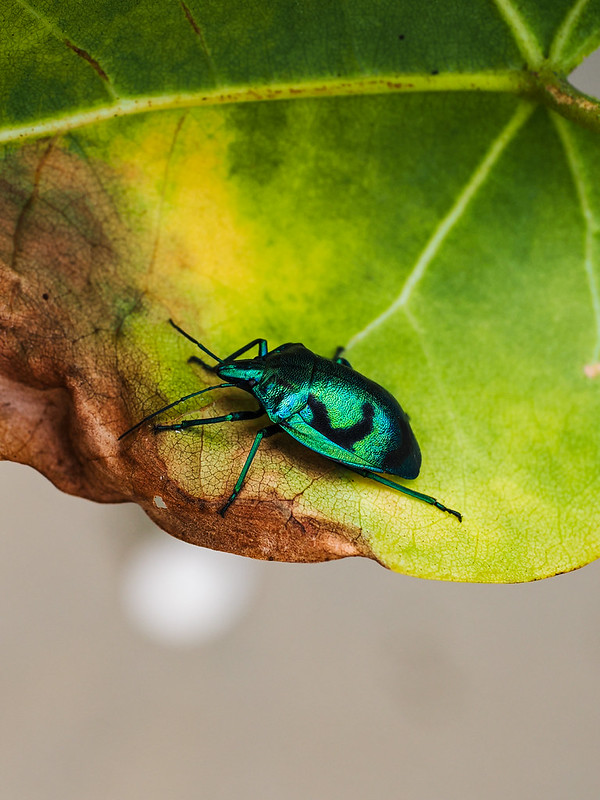
His nickname was ‘Hunter’ and he said his friend would be meeting him by boat to help carry the cow to the village. Apparently his dogs don’t like the boat so they had to walk the route. We went our separate ways when he said he was going to bushwhack which I wasn’t keen to do; however, that’s exactly what we ended up doing on our own as we realised we could cut up to the ridge.
Along the way we passed handmade traps that Hunter had made in the bush, and after a bit of a struggle we reached the top where we got a great view across the island. It would have been so much better if the sun were out but it was still very pretty and I was grateful to be walking along a clear trail again.

The following day was the funeral so most of the villagers were preparing some food for the wake. The nephew of the man who passed had a long chat with us, inviting us to join the feast and enter the church, but we didn’t want to intrude and instead stood outside where we could hear them singing.
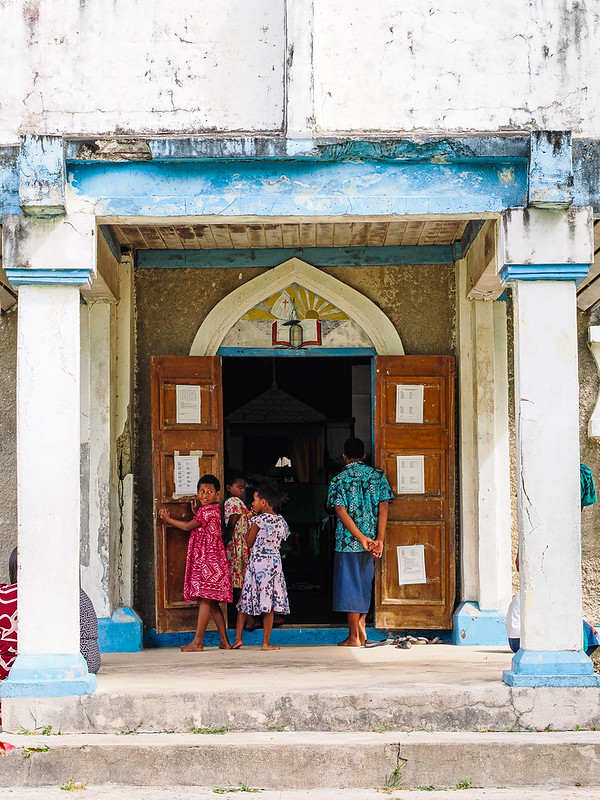
It would have been interesting to join the wake as all of the locals were so welcoming, but we had to leave the island and head back to mainland Fiji. The sea was extremely rough when we left so our captain stuck close to the shore, precariously close in my opinion.

He obviously knew where the reef was but at times it looked like we were just a foot above it as we bounced over the waves at full speed. It was quite scary in such windy conditions, but we arrived safely and proceeded to bob in the sea while we waited for the Yasawa Flyer to turn up.
The journey back was entertaining as the rough sea kept spraying the people at the back of the boat. We had a perfect view of the spray from the waves splashing onto the deck and hitting people in the face. It was hilarious because they were acting nonchalant about it while we, dry people on the other side were in hysterics.
We ended the trip with an incredible curry before heading to the airport the next day on one of Fiji’s open-sided buses where the driver pumped out the music.

